

In a world where toasters can tweet and fridges can order groceries, IoT hardware is the unsung hero of modern convenience. Imagine a life where your coffee brews itself as you wake up, all thanks to a little gadget that knows your routine better than your best friend. This tech isn’t just smart; it’s practically a wizard, turning mundane tasks into seamless experiences.
Understanding IoT Hardware
IoT hardware comprises various components that enable devices to connect and communicate over the internet. Sensors collect data from the environment, while microcontrollers process the data and execute commands. Actuators receive the processed data and perform specific actions, such as turning on a light or adjusting a thermostat.
Connectivity modules, like Wi-Fi, Bluetooth, and cellular networks, allow these devices to transmit data and communicate with other devices or cloud services. Each module serves a distinct purpose, optimizing interactions based on range, bandwidth, and power consumption.
Power sources play a crucial role in sustaining IoT devices. Many devices rely on batteries, while others use wired connections or solar power for energy. This choice impacts the device’s placement and operational efficiency.
Moreover, IoT hardware can include gateways, which act as intermediaries between local devices and the cloud. They aggregate data from various sensors and send it to cloud platforms for analysis and storage. The immediate advantage includes reduced latency and improved data management.
Security features are essential in IoT hardware to protect against unauthorized access and data breaches. Encryption methods, authentication protocols, and secure boot processes contribute to safeguarding device integrity. Manufacturers prioritize these features to enhance user trust and device longevity.
Selecting the appropriate hardware depends on the intended application. Smart homes, healthcare systems, and industrial automation have different requirements. Each application demands specific functionalities, performance metrics, and scalability options to ensure an optimal user experience.
Types of IoT Hardware
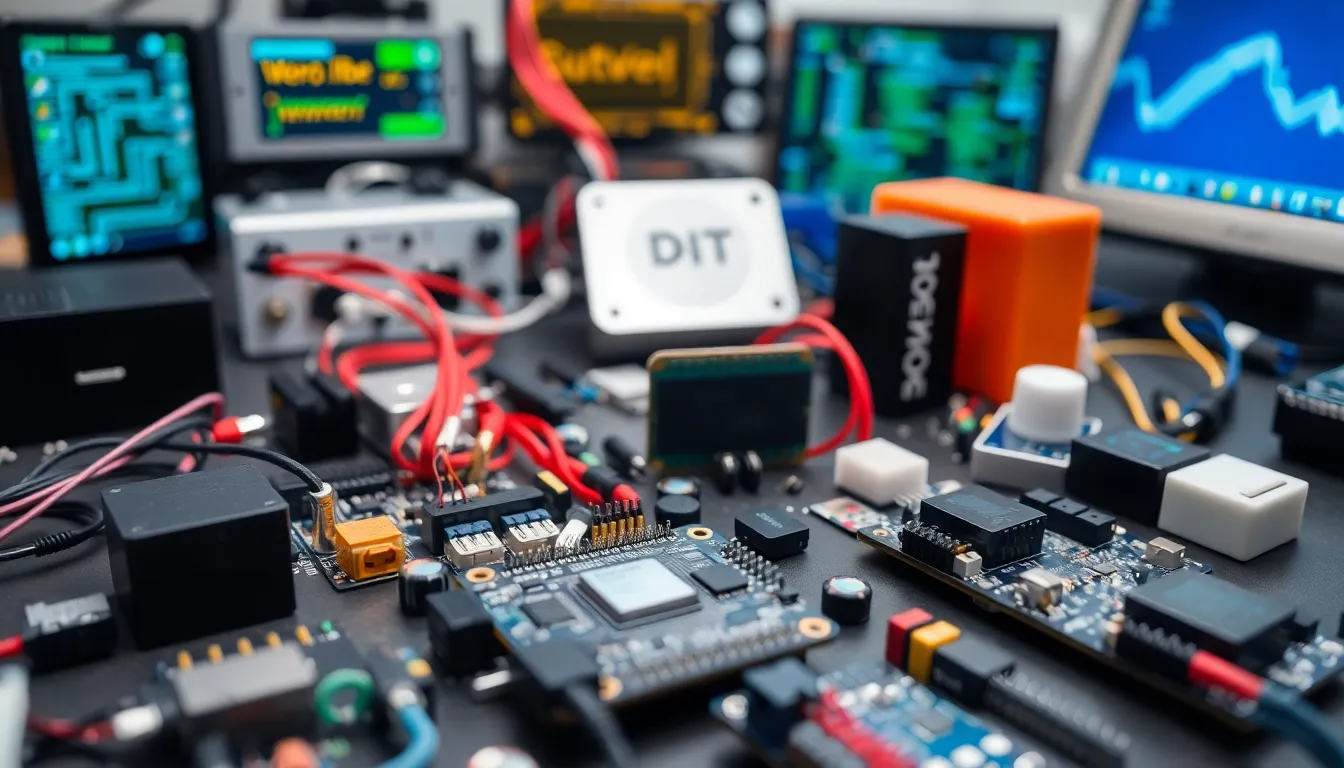
IoT hardware encompasses various components, each serving unique functions to create smart ecosystems. Understanding these types is vital for effective implementation.
Sensors and Actuators
Sensors collect data from the environment, monitoring parameters like temperature, humidity, and motion. These devices convert physical phenomena into digital signals. Actuators, on the other hand, translate commands from a microcontroller into physical actions, such as turning on lights or adjusting a thermostat. Sensors and actuators work together to create responsive systems. For instance, a temperature sensor can signal an actuator to initiate cooling when the temperature exceeds a set threshold. Reliable sensor and actuator integration ensures accurate monitoring and control within IoT applications.
Microcontrollers and Processing Units
Microcontrollers function as the brain of IoT devices, processing data from sensors and executing tasks. They take input from various sensors and make real-time decisions based on programmed logic. Processing units, including both microcontrollers and higher-level computing components, enhance computational power for complex tasks. These units enable data analytics and decision-making capabilities. An example includes using a robust microcontroller in a smart thermostat that adjusts settings based on user preferences and external conditions. Choosing the right microcontroller impacts performance and efficiency in diverse IoT applications.
Key Components of IoT Hardware
IoT hardware consists of various essential components that contribute to the functionality and efficiency of smart devices. These components play crucial roles in collecting data, processing information, and executing tasks.
Connectivity Modules
Connectivity modules facilitate communication among IoT devices and cloud services. Wi-Fi modules enable devices to connect to local networks, while Bluetooth modules support short-range communication, allowing seamless interactions between products. Cellular modules provide connection over broader distances, essential for devices deployed in remote areas. Zigbee and LoRaWAN are alternative options that offer low-power communication solutions for specific applications. Choosing the right connectivity module impacts the device’s operational range and data transmission speed.
Power Supply Solutions
Power supply solutions are vital for IoT devices, determining their efficiency and placement. Batteries serve as common power sources, offering flexibility for portable applications. Solar energy solutions present an eco-friendly option for devices exposed to sunlight, extending their operational lifespan. Energy harvesting techniques draw power from environmental sources like motion or temperature variations, minimizing reliance on traditional batteries. Selecting an appropriate power supply method directly influences the sustainability and longevity of IoT hardware, contributing to a reliable user experience.
Challenges in IoT Hardware Design
Designing IoT hardware presents various complexities that can hinder effective implementation. Power management emerges as a primary concern, as devices require energy-efficient solutions to function over extended periods. Selecting the right power source, such as batteries or solar energy, significantly influences longevity and performance.
Connectivity plays a vital role in IoT hardware functionality. Different modules like Wi-Fi, Bluetooth, and cellular networks vary in range and data transmission capabilities. Ensuring seamless communication between devices and cloud services remains a challenge, particularly in diverse environments where signal interference can occur.
Security also poses substantial hurdles. With increased connections comes heightened vulnerability to cyber threats. Implementing robust security measures, including encryption and secure boot mechanisms, protects sensitive data and maintains device integrity.
Component miniaturization needs careful consideration as well. The trend towards smaller devices results in cramped spaces for hardware components, complicating thermal management and overall design. Balancing size with performance requirements is crucial.
Integration stands as a key challenge in combining various components, such as sensors, microcontrollers, and actuators. Each component must work harmoniously to ensure accurate data collection and responsive actions. Misalignment in this integration can lead to device failures or inaccurate readings.
Meeting regulatory standards adds another layer of complexity. Different regions have specific compliance requirements affecting hardware design and deployment. Understanding and adhering to these regulations is essential for market success.
Addressing these challenges requires expertise and a strategic approach. As IoT technology evolves, continuous innovations will help overcome these obstacles, paving the way for enhanced user experiences and smarter devices.
Future Trends in IoT Hardware
Innovations in IoT hardware are poised to transform industries and daily lives. Emerging technologies enhance connectivity and processing power, facilitating faster and more efficient devices. Integration of artificial intelligence into IoT devices allows for more intuitive user interactions and smarter decision-making.
Miniaturization trends continue to play a vital role in hardware development. Smaller components lead to more compact designs while maintaining performance. These advancements also create opportunities for upgrading existing products with enhanced capabilities, making them smarter without requiring significant redesigns.
Sustainability emerges as a crucial consideration. IoT manufacturers focus on energy-efficient devices powered by renewable sources. Solar energy and energy harvesting techniques reduce reliance on traditional power supplies, extending device lifespan and minimizing ecological impact.
Security remains a priority as the number of connected devices grows. Innovations in encryption and authentication methods aim to safeguard user data from cyber threats. Improved security protocols are essential to build trust in IoT systems, particularly in sensitive sectors like healthcare and finance.
Interoperability across platforms continues to trend as well. Devices from different manufacturers increasingly communicate effectively, enabling seamless user experiences. Standardization efforts ensure compatibility, allowing users to integrate diverse technologies without friction.
Power management innovations pave the way for longer-lasting devices. Advanced battery technologies and energy-efficient designs extend longevity while reducing maintenance needs. Optimal power solutions establish a foundation for reliable IoT solutions across various applications.
Finally, real-time data analytics are becoming indispensable. Devices equipped with edge computing capabilities process data locally, minimizing latency and enhancing responsiveness. This shift supports faster decision-making processes, creating more agile systems capable of adapting to user behavior.
The evolution of IoT hardware is reshaping how individuals interact with technology in their daily lives. As devices become smarter and more integrated, the opportunities for enhanced convenience and efficiency are limitless. The ongoing advancements in connectivity, power management, and security are crucial for fostering a reliable and user-friendly environment.
Embracing these innovations not only improves personal experiences but also drives significant changes across various industries. As manufacturers prioritize sustainability and interoperability, the future of IoT hardware promises to be more connected and responsive. Staying informed about these trends will empower users to make educated choices in a rapidly evolving landscape.